起点
The beginning
In 1873, a young man named 余广 (Eu Kong) left 佛山 (Foshan), in southern China, for the tin-mining towns of Malaya — with almost nothing. He watched the mine coolies around him, worn down by brutal labour, turn to opium simply to endure the days.
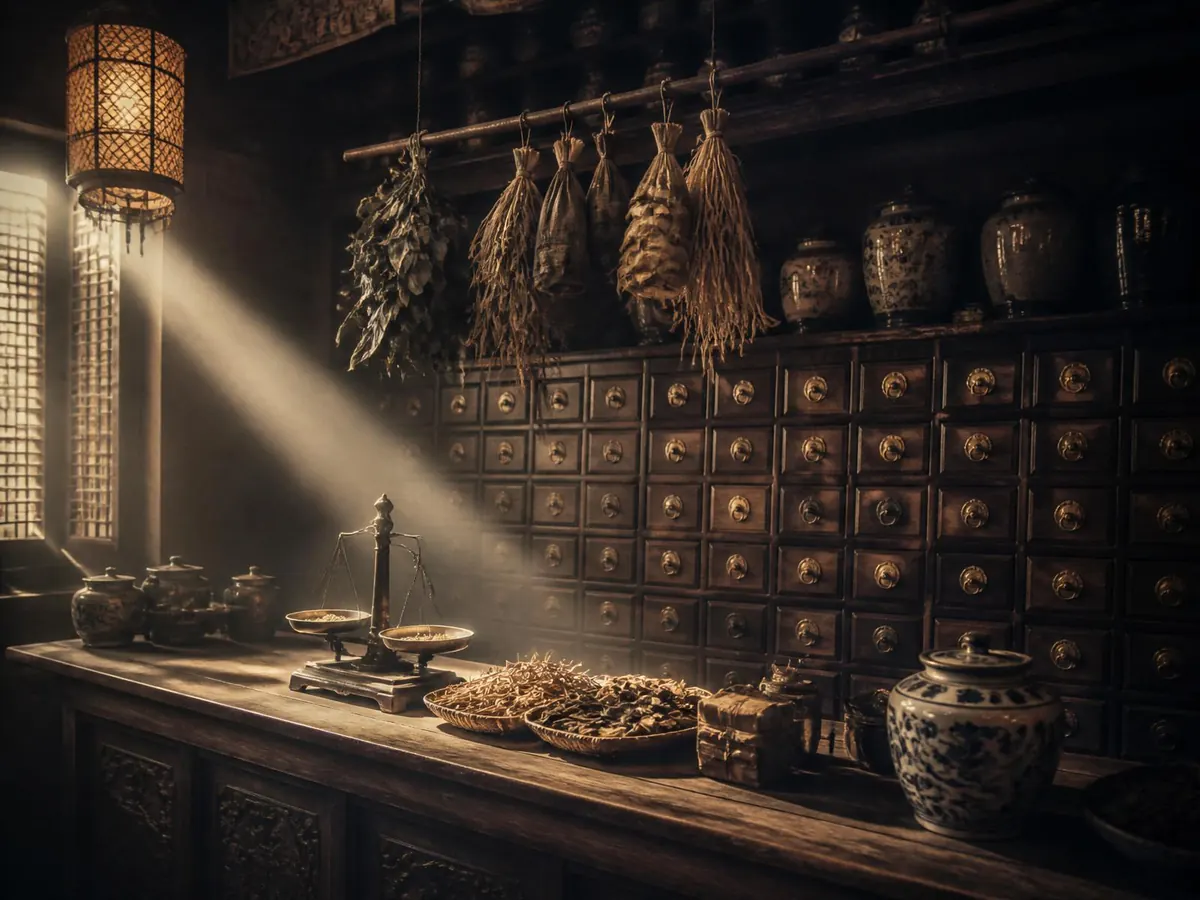
In 1879, in 牙直利 (Gopeng), Perak, he opened a single medicine shop to give them something better: real Chinese medicine, affordably. He named it 仁生 — "caring for mankind." The value was in the name from the first day. There was no fortune yet. There was only a purpose.
守住父志
The decision
Eu Kong died suddenly in 1890. His only son, 余东璇 (Eu Tong Sen), was still a boy; he took full control of the business when he came of age at 21 — inheriting not a great fortune, but his father's purpose and his father's shop.
He could have chased profit anywhere. Instead he kept the thread. Wherever he opened a tin mine, he opened a medicine shop beside it, to care for the workers. He built the business around the value his father had named it for — and joined the family name to it, so that what the family stood for and what the family was became one thing: 余仁生 · Eu Yan Sang.
富甲一方
What it became
Eu Tong Sen became one of the most successful men in the region — tin, rubber, banking, and more than a thousand properties across Malaya, Singapore and Hong Kong. Reading the signs early, he pulled back before the 1929 crash and rode out the Depression that ruined others.
In Singapore, 余东璇街 (Eu Tong Sen Street) in Chinatown still carries his name; so do the grand mansions and the theatres he built across the region.
But here is the honest part — and the lesson inside it.
年谱 · A ledger of the arc
- 1873南渡Eu Kong leaves 佛山 for Malaya
- 1879开号 · 仁生One medicine shop, Gopeng
- 1890承志Eu Tong Sen inherits at 21
- 1929退于市前Pulls back before the crash
- 1941分家Estate divided among thirteen sons
- 今余仁生 传The name still stands
分则易散
What they passed on — and what they didn't
When Eu Tong Sen died in 1941, his estate was divided equally among his thirteen sons. Divided, and in the next generation divided again — and without a structure to hold it together, the great fortune fragmented. By the 1970s, most of the businesses had been sold or wound up.
One thing survived: 余仁生 · Eu Yan Sang — the house built on 仁生, caring for mankind. And it survived because a later generation of the family cared enough to consolidate it back into family hands and rebuild it, out of respect for what their forebears had stood for. Today it is led by a fourth-generation descendant, 余义明 · Richard Eu.
The wealth scattered. The values held. The family reclaimed the one thing that carried their name — because that thing carried their character, not their money.
钱财分则易散,
一个值得为之而活的价值,却值得后人回头守护。
Money divided without a plan fades. A value worth living for is worth coming back for.
余仁生 · the shop-mark that outlived the fortune
从你开始 · The lesson for your family
余广起于一间药铺,凭的只是一个信念。
Eu Kong began with one shop and one belief.
Not a fortune — a purpose, named on a signboard: 仁生, caring for mankind. The wealth his family built was real, but it fragmented, because it was divided without a structure to hold it. What endured was the value at the very beginning.
You are closer to that first shop than to any empire. What you pass on — and whether it's held together well enough to last — is the choice in front of you now.
Every hundred-year family began with one person who decided what mattered. Yours can begin with you.
Writing your family's values down — and building the structure to hold them together, so they aren't divided and lost — is the work we do. It begins with a single guide, or a single conversation.